The following texts and content on this page were partially or completely generated with the help of generative AI models.
What's this about?
This blog is about the manufacturing of the future. The basis is the whitepaper "Data-Driven Manufacturing" by Fraunhofer IFF from Magdeburg, which you can find here.
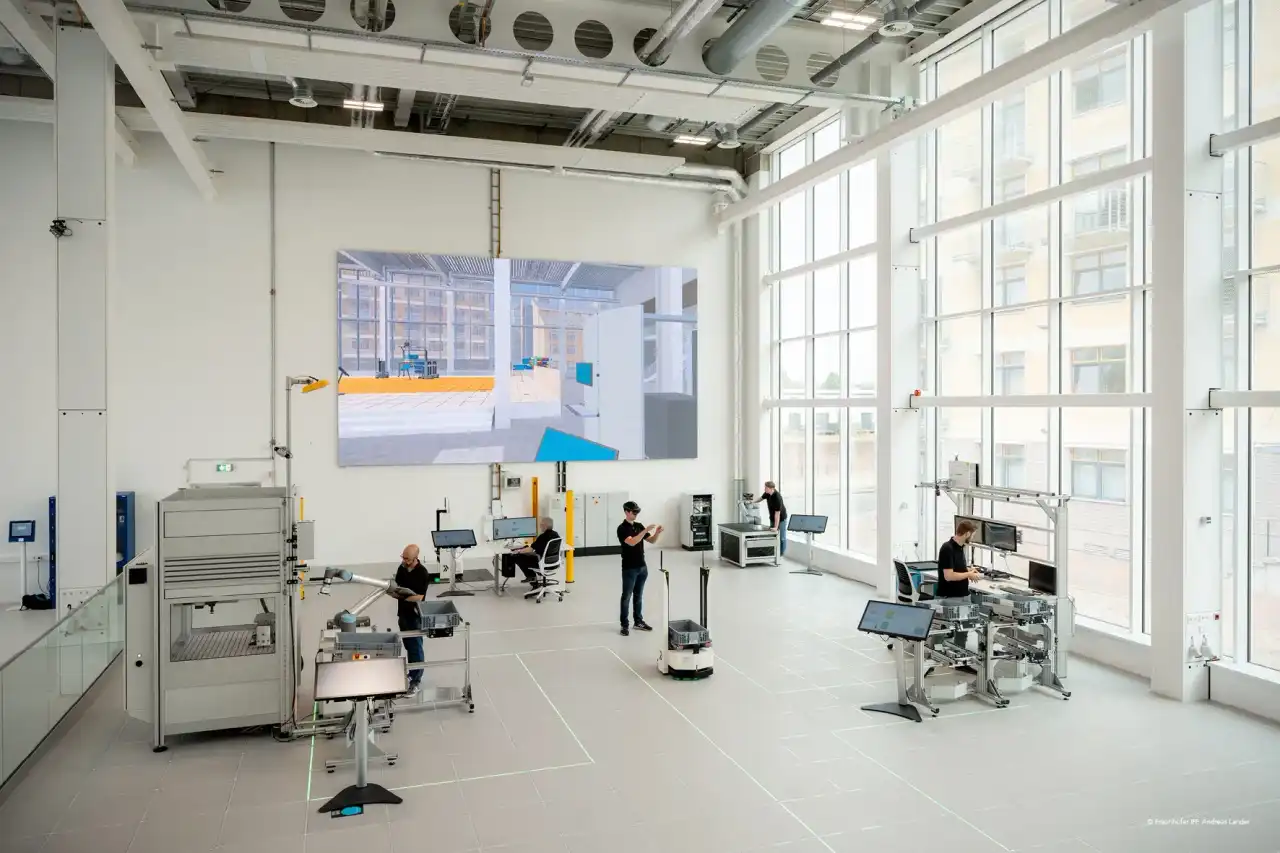
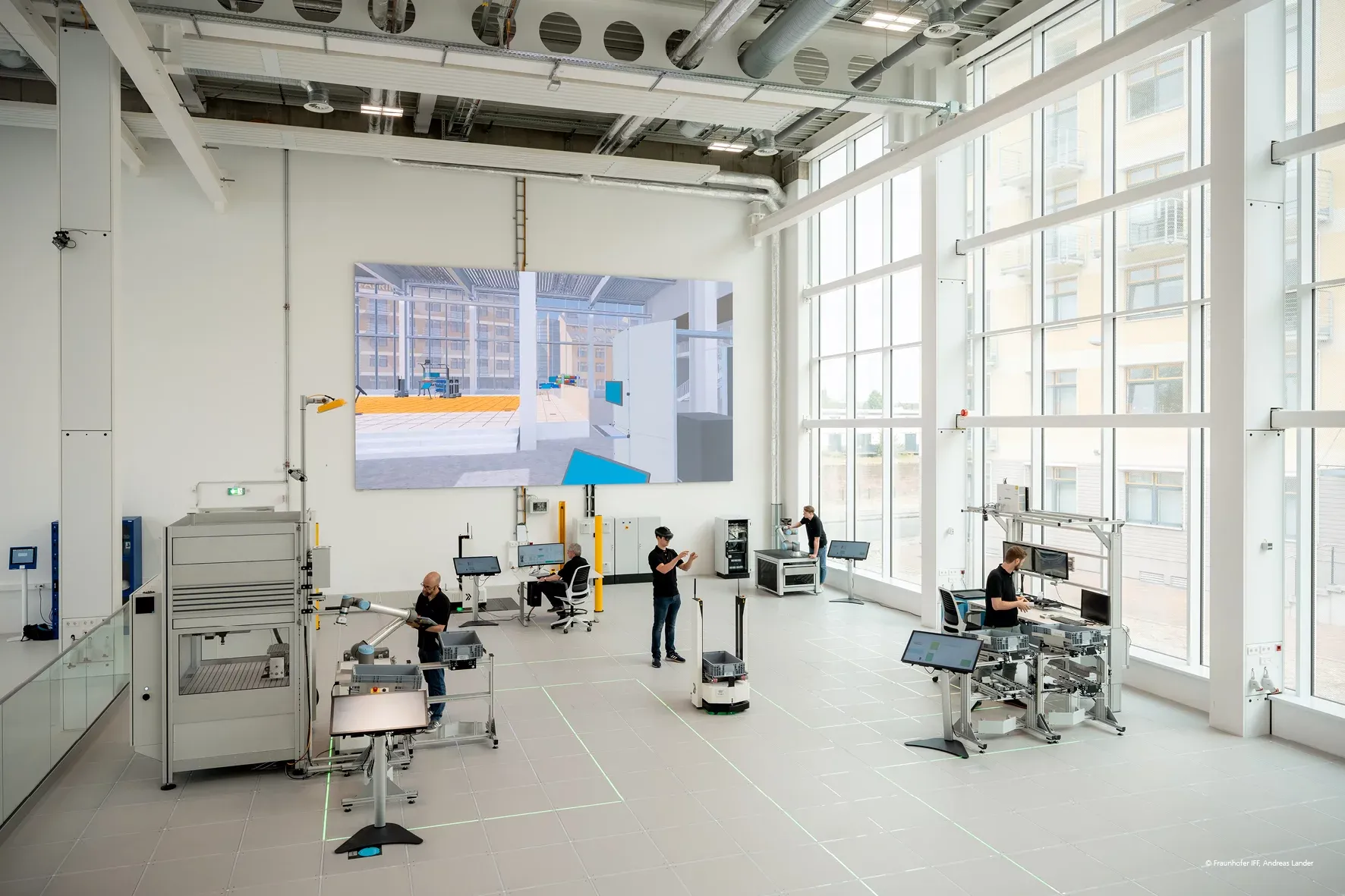
It deals with modern concepts for the world of manufacturing that solve various challenges of the past and take advantage of the new opportunities offered by technical progress. All of this was created in collaboration with the Magdeburg Elbfabrik: a demo factory that you can visit to see these and other concepts in reality.
This blog came about because many SAP customers have a manufacturing operation and should therefore be interested in such future-oriented concepts.
At Brandeis, we primarily offer technical training on development on S/4HANA. For us, collaboration with manufacturing is above all a technical integration topic that we keep encountering in projects and for which we offer training for SAP ABAP developers.
Data-driven manufacturing - explained simply
It is not particularly helpful to reproduce the contents of the whitepaper here 1:1. However, it is also not always easy to understand such texts when terms are used that you tend not to use in your own domain, or that may even have differing meanings.
That's why we use here the new possibilities of AI, which summarized the key points in simple language for 5-year-olds:
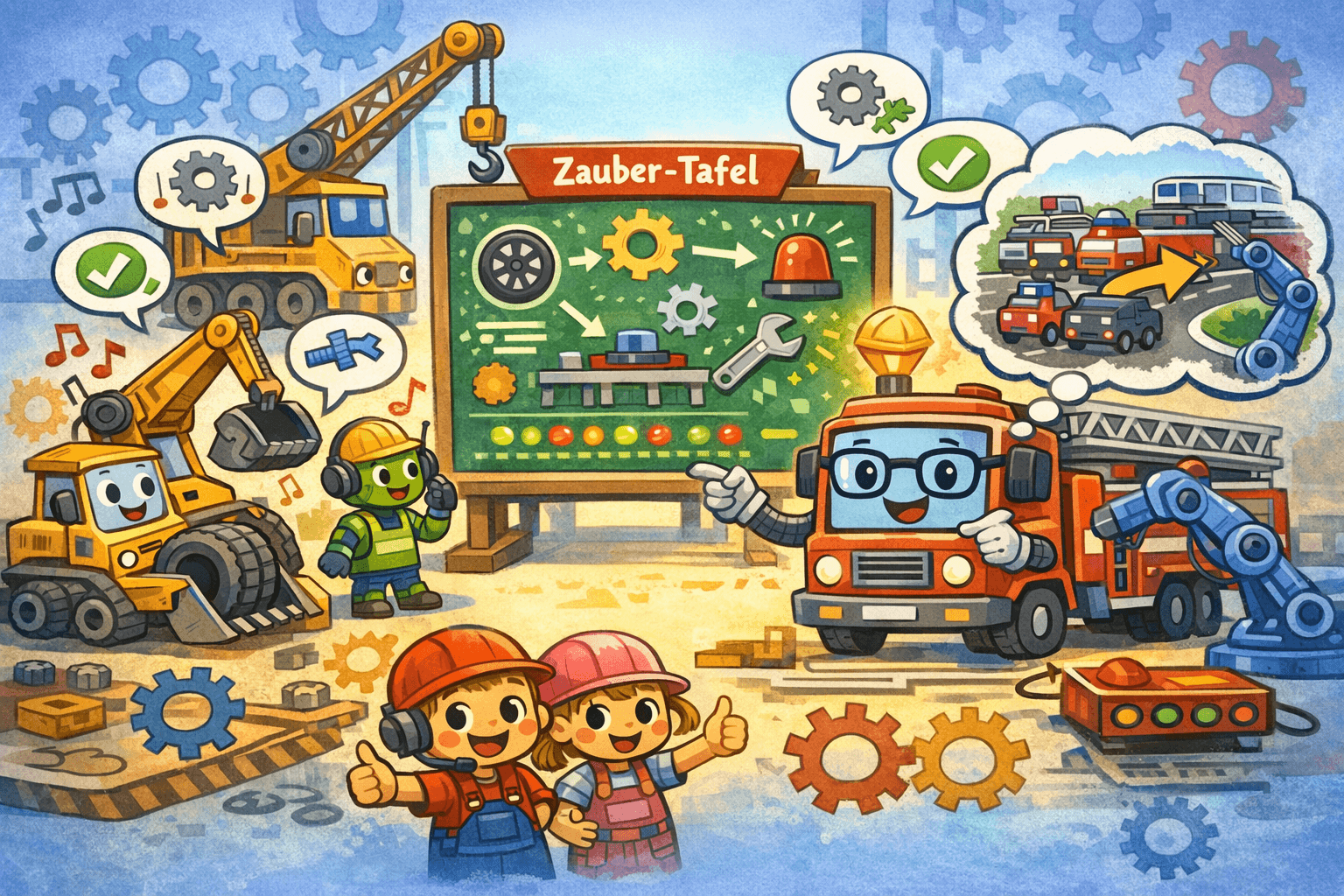
Imagine a factory is like a huge room full of smart toys that all want to build something great together, for example a big fire truck.
It used to be like this: every toy just worked away on its own and didn't know what the others were doing. When the digger needed help, it first had to laboriously walk over to the crane and ask. That took a long time and there was often a huge mess.
With data-driven manufacturing, it's now completely different:
Everyone has a walkie-talkie (real-time): every machine and every tool immediately tells all the others what it's doing right now. When a machine is tired or a part is missing, all the others know it right away.
The magic board (Unified Namespace): in the middle of the room stands a huge magic board. Every toy always quickly writes down there what it's doing right now. No one has to run around anymore asking "Are you done yet?". You just look at the board and know.
A smart helper (AI): there is a super-smart computer friend who looks at the board the whole time. He's like a superhero who knows in advance when there might be a traffic jam, and tells the toys: "You'd better go around to the left, then it'll be faster!".
Everyone speaks the same language: so that no one misunderstands each other, everyone has agreed on what the words mean. When someone says "wheel", everyone knows exactly which wheel is meant, so that in the end everything fits together perfectly.
The result? Instead of needing many days, the fire truck is now finished in just a few hours, and all the toys are happy because they know exactly what they have to do.
Was it awful to descend to the level of 5-year-olds?
In the future we should use much more plain language to "meet others where they are". The world has become more complex, and the necessary collaboration should not fail already at the level of language...
How does the world of manufacturing work so far?
When talking about digitalization and automation in manufacturing, the "automation pyramid" is frequently used. An SAP system is represented as an ERP system at the top of this pyramid.
So if, from an SAP perspective, you want an integration into manufacturing, you often have to "fight your way through" the individual layers of this pyramid. That means you need several people from different areas at the "table" who want to be convinced and who have to reach agreement.
In practice, this can lead to lengthy discussions and projects that often fail to reach their goals or are abandoned prematurely.
There are frequently misunderstandings when, for example, (SAP) IT people meet the OT people in manufacturing. The worlds of IT and OT - "Operational Technology" - are very different, and the control cabinets in manufacturing are closed off to SAP. We urgently need to change this in order to be able to leverage the digitalization potential for all sides.
Even when such automation projects reach their goal, that doesn't mean the implementers can be proud of their work. Perhaps they have only further increased the complexity in the company and fueled the so-called "interface hell".
The whitepaper by Fraunhofer shows alternative approaches here.
What is different?
An important difference from the often-used "data is the new oil" is that data can be copied arbitrarily. That's why it is important to ensure data quality very early and to agree on common standards.
The fundamental differences from the classic mindset of IT, as I see them, summarized briefly here:
- Data is pushed, not pulled
- We no longer build interfaces but "data flows with handover points"
- The data producers actively ensure that their data is available in good quality and in real time on a central platform
- No concrete use cases or already known data consumers are necessary in order to actively provide data
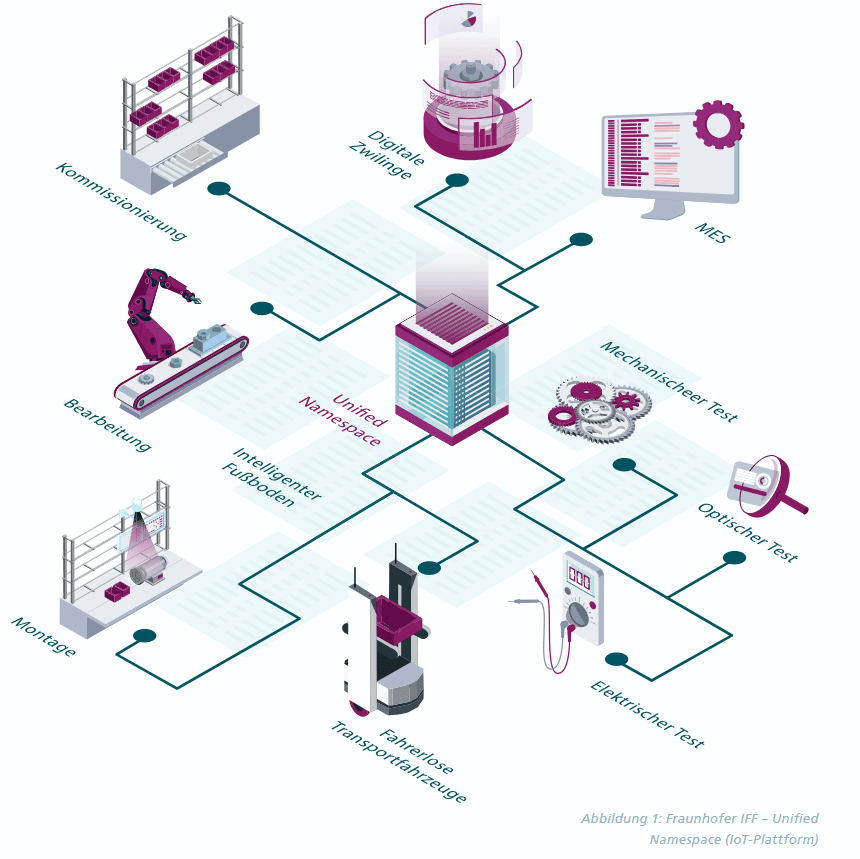
- The concept of the "Unified Namespace" ensures the same semantics of the data for all participants
- Event-driven architecture (EDA) and data broker concepts deliver the data to consumers in real time
- Concepts of the "asset administration shell" make (e.g. the last known) data available, and concepts of "data spaces" share it securely with external parties
- An SAP system is no longer just the top of the "automation pyramid" but an equal and active partner at the "real-time data table", one that does not just "tap" data but also provides it
In this way, we free ourselves from the usual "point-to-point interfaces" and become part of a "data ecosystem".
Video
Do you want more?
Did you enjoy this blog and want to learn more?
Here are some further suggestions for you:
- Write an email to info@brandeis.de and have yourself added to the "OT distribution list". Through this list we regularly provide information on these and other topics from manufacturing.
- Take a look at our training "ABAP HTTP Connectivity - Basics". There we cover integration topics with SAP ABAP and examples from manufacturing.
- Check the Brandeis event calendar or the event pages of Fraunhofer IFF to see whether open events on manufacturing topics and on the Elbfabrik are offered.
- Get in touch with us if you are interested in information events with the Elbfabrik and SAP. Special IT/OT training courses as a team event are feasible.
- Book a personal appointment at the Elbfabrik for your company and bring along both IT and OT colleagues.